


Elevation of Beauvais Cathedral
my civilization is heir to Christian values.
I will reflect on the construction of the cathedral, to better understand its architecture.
Saint-Exupéry
Let's continue with a study of Beauvais's elevation. Professor Stephen Murray of Columbia University has studied this cathedral in a fascinating article entitled Plotting Gothic: À Paradox. Figure 1 shows an example of his work.

Fig. 1 - Elevation of Beauvais Cathedral after S. Murray
Let's try our hand at this elevation (fig. 2). As in the previous examples, the main nave houses two equilateral triangles set vertically. Here, to increase the vaulted height of the nave, this ratio is completed by a polygon based on a 2/3 ratio.
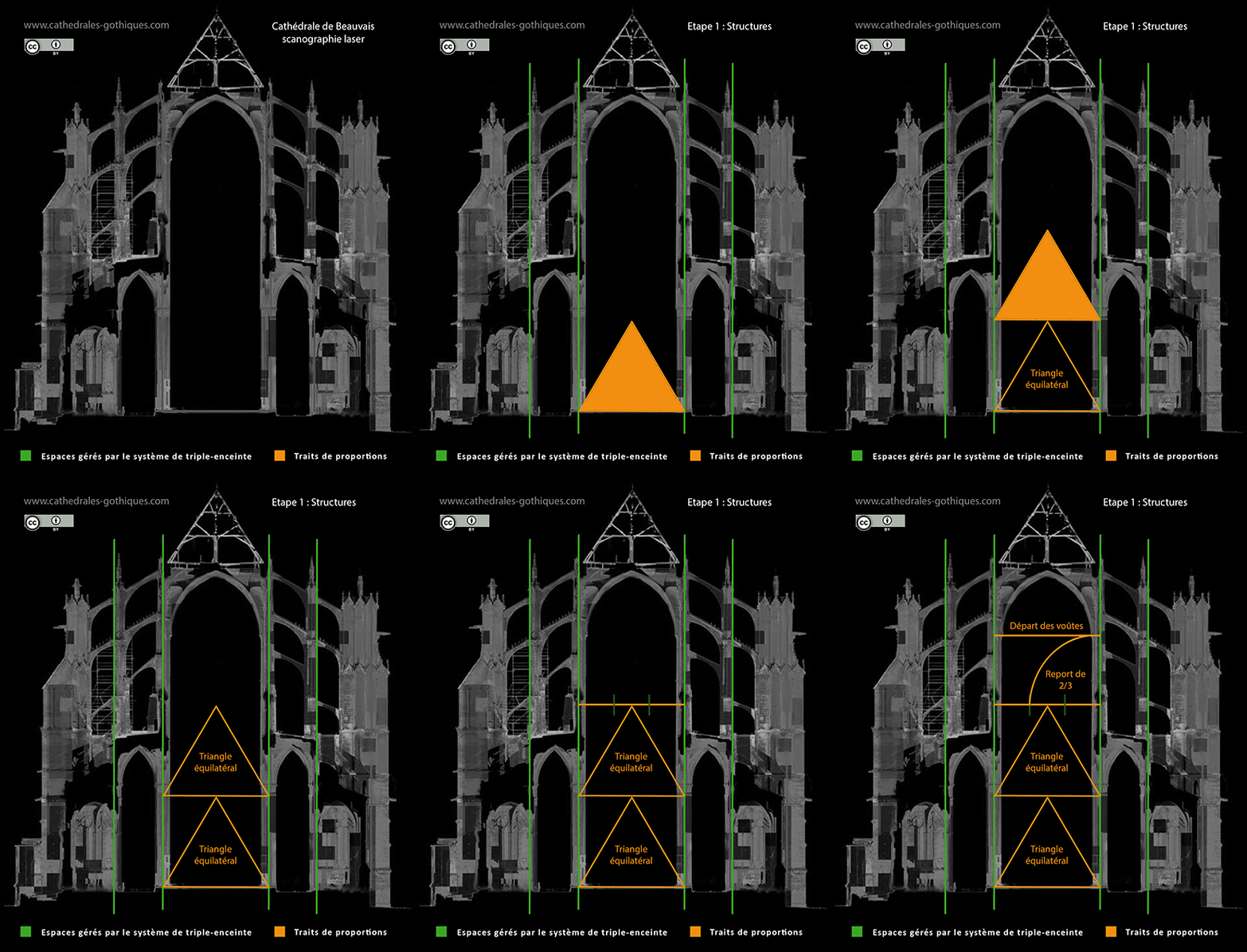
Fig. 2 - Elevation of Beauvais Cathedral (stage 1)
The profiles are drawn using a double square (fig. 3). This long square is also completed by one of the first polygons encountered in this book, the Pythagorean triangle. This triangle is found again in the collaterals, set vertically above a square topped by an equilateral triangle. In the latter case, the Pythagorean triangle doubles the vertical proportion by 2/3.
I'll finish by pointing out that the main vessel's ogive is derived from a division of the base by two points, while that of the side aisle is derived from eccentric points.
At this point, it's fascinating to note that cathedrals as different as Bourges and Beauvais have the same basic layout for the main nave, and that all the examples are based on common geometric procedures.
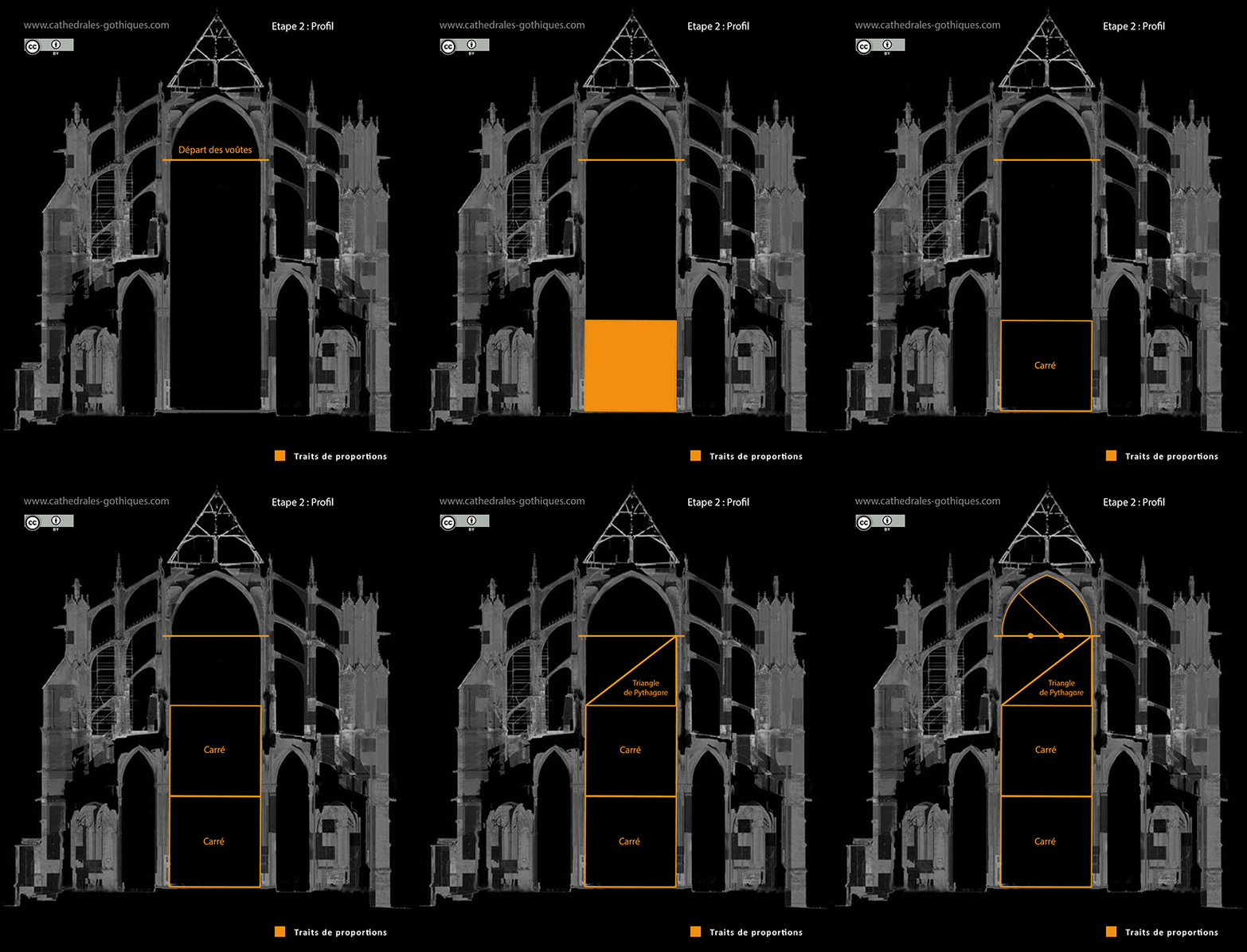
Fig. 3 - Elevation of Beauvais cathedral (stage 2)
Let's finalize this analysis by merging the two previous diagrams (Fig. 4). As in Bourges, the lines given by the two systems overlap exactly. In the nave, the squares merge with the triangles, and the top constructions intersect to set the same height in unison.
The master of Beauvais was a geometrician of genius. The complexity and boldness of his layouts are matched by their astonishing coherence. This layout is an apotheosis.

Fig. 4 - Elevation of Beauvais Cathedral (stage 3)
Credits: The scan in Fig. 1 comes from a document provided by Andrew Tallon to Professor Stephen Murray for his article Plotting Gothic: À Paradox, licensed under CC BY 3.0. Here, the scan has been turned negative and I've shown the projections of the triple speaker system in elevation in green.
N.B. Interested readers will find other examples in the book, including a study of the elevation of Chartres Cathedral.
Commentaires

David Orbach (Architecte - Ingénieur structure - Enseignant à l’Université Populaire de Caen de Michel Onfray)

Jean-Michel Mathonière - Directeur éditorial chez Éditions Dervy - Historien des compagnonnages

Cathédraloscope

Site : lescathedrales.wordpress.com

Jean-Pierre Bourcier - Spécialiste du trait

Olivier Petit - Médiéviste

Jean-François Lecompte - écrivain

Luciano Xavier - Maquettiste en cathédrales gothiques

Arcana Les Mystères du Monde - Youtubeur (Chaine Arcana)

troph38

Jean-François Lecompte - écrivain
John Brown

Armand Priest (ESTP) - Commentaire Facebook

Anthony CRESTIN - La géométrie et le mythe

Joël Supéry - Site tuskaland.com

Asso Fermat-Science

M. Moldovan

Catherine Leschenne




Dominique Gury